
Your eyes can be under pressure right now and you’d have no idea. There’s no pain, no blurry vision, no warning signs of any kind. That’s what makes ocular hypertension so easy to miss, and so important to catch early. Erie Shores Eyecare sees patients regularly who had no idea their eye pressure was elevated until a routine exam revealed it. The eye disease diagnosis and management process starts with detection, and detection starts with showing up for that exam.
Ocular hypertension is a condition where the pressure inside your eye is higher than the normal range, which can put your optic nerve at risk over time if it goes undetected. The good news is that routine eye exams can catch it before any damage occurs.
Eye Pressure & What It Means for Your Eyes
Your eye constantly produces a clear fluid called aqueous humour. This fluid flows through the eye and drains out through a small drainage angle. When that drainage slows down or gets blocked, pressure builds up inside the eye.
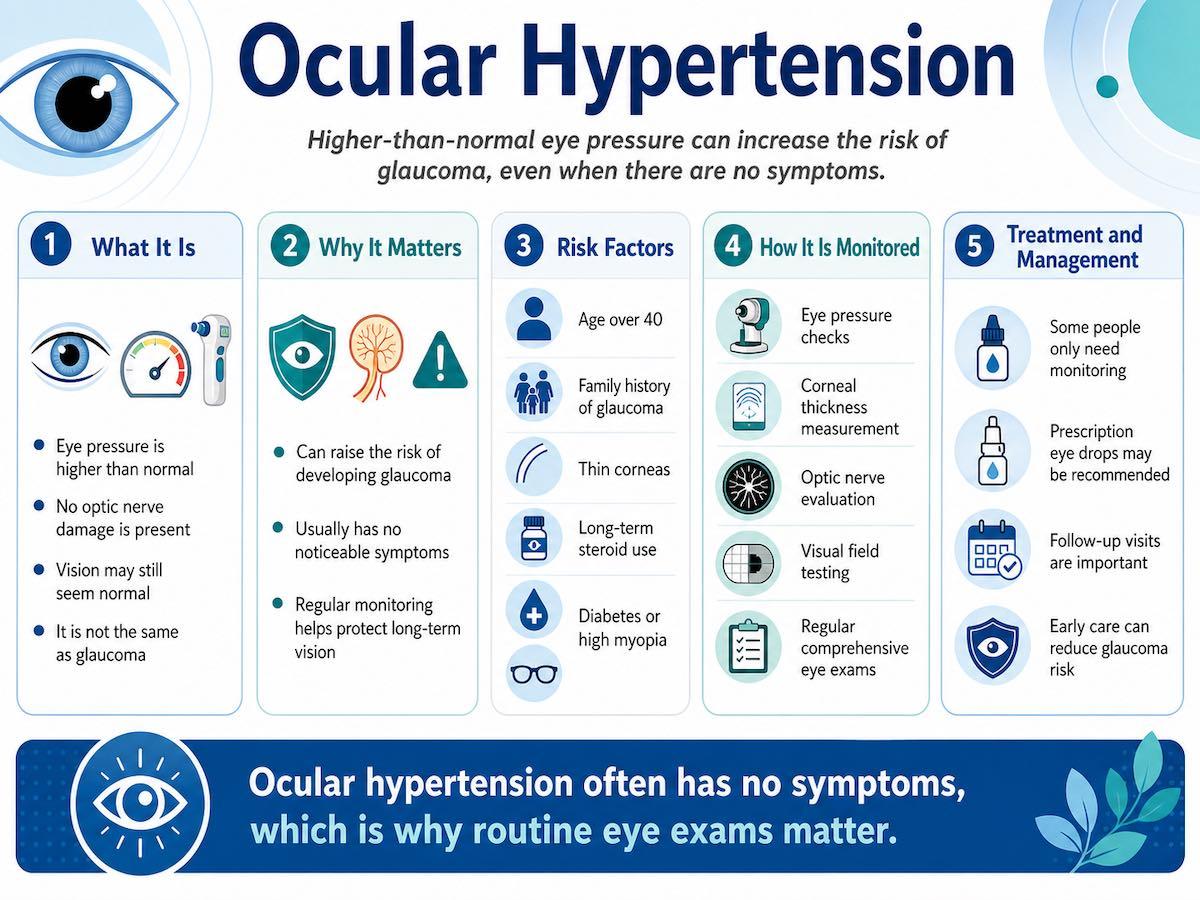
A normal eye pressure reading sits somewhere between 11 and 21 mmHg. When a reading comes back higher than 21 mmHg on more than one occasion, that’s considered ocular hypertension. Higher pressure doesn’t automatically mean your vision is in danger right this moment, but it does mean the situation needs to be watched closely. Glaucoma is one condition that elevated eye pressure can progress toward, making early detection especially worthwhile.
Ocular Hypertension vs. Glaucoma
These two conditions are closely connected but they’re not the same thing. Ocular hypertension means your eye pressure is elevated, but your optic nerve hasn’t shown any signs of damage yet. Glaucoma, on the other hand, is what happens when that ongoing pressure starts to damage the optic nerve.
Think of ocular hypertension as a yellow light. It’s a signal to pay attention before the situation changes. Glaucoma that goes untreated can lead to permanent vision loss, which is why catching elevated pressure early, through eye disease management, makes such a difference in protecting your long-term sight. You can learn more about how glaucoma is tested to get a better sense of what that monitoring process involves.
Who Is at Higher Risk
Age & Family History
If you’re over 40, your risk of developing ocular hypertension goes up. The drainage system in your eye can become less efficient as you age, making it harder for fluid to flow out the way it should. It’s a gradual shift that happens without any noticeable signs.
Family history also plays a role. If a parent or sibling has been diagnosed with glaucoma, your chances of developing high eye pressure are higher than someone with no family history of the condition. Mentioning this to your optometrist during an exam helps them keep a closer eye on your results over time. Booking an adult or senior eye exam is a practical way to get that conversation started.
Health & Lifestyle Factors
Certain health conditions can raise your risk, including diabetes, high blood pressure, and severe myopia. If you’ve had an eye injury or previous eye surgery, those are also factors worth flagging. Long-term use of corticosteroid medications, whether in eye drop form or taken orally, has also been linked to increased eye pressure.
None of these factors mean ocular hypertension is unavoidable for you, but they do make regular monitoring more important. Your optometrist can review your full health picture and track any changes in your eye pressure over time. If diabetes is part of your health history, diabetic eye exams offer a more targeted look at how your overall health may be affecting your eyes.
How Ocular Hypertension Is Detected
No Symptoms to Watch For
This condition is completely silent. There’s no headache, no visual disturbance, no sensation of pressure that you’d actually feel. Many people are surprised to learn their eye pressure is elevated because they felt no different than usual going into an exam.
That’s exactly why routine eye exams are so important. They’re not just for checking whether you need a new prescription. They’re how conditions like ocular hypertension get caught before they have a chance to do any real harm.
The Ontario Association of Optometrists notes that optometrists are trained to recognize changes in the eye that may signal broader health concerns, including diabetes, high blood pressure, and signs of stroke risk, making comprehensive eye exams far more valuable than a simple vision check.
Tests Done During an Eye Exam
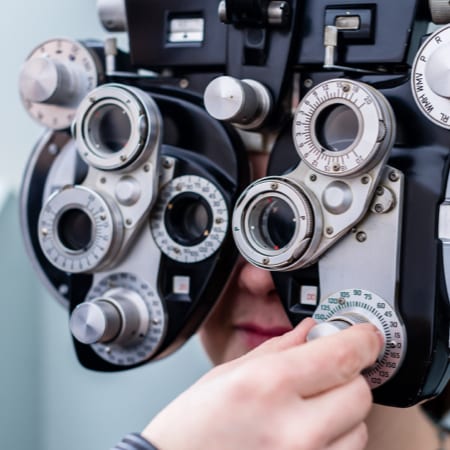
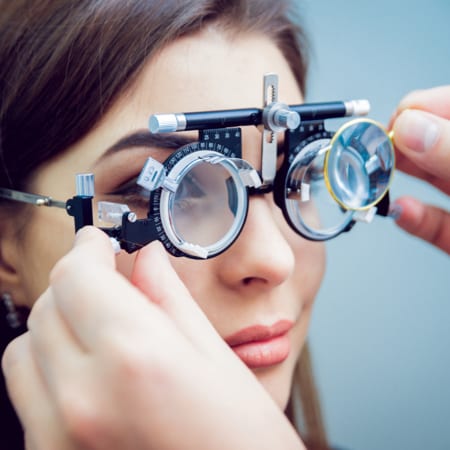
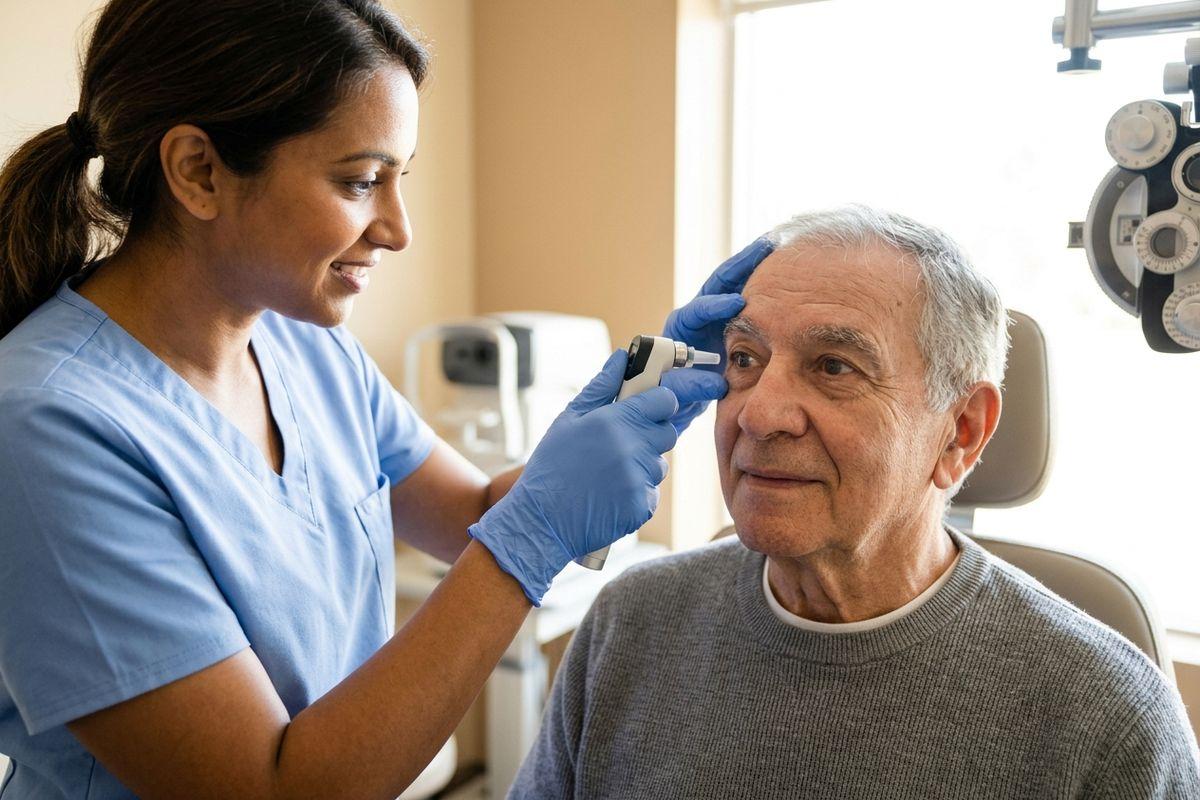
Whether you visit our Leamington or Essex location, our team uses a few key tests to assess your eye pressure. Tonometry is the main one, and it measures the pressure inside your eye directly. It’s quick and straightforward.
A corneal thickness test, called pachymetry, also helps the team understand your glaucoma risk more accurately. Thinner corneas can mean a higher risk of nerve damage at lower pressure levels. The optometrist will also examine your optic nerve for any early signs of change.
Treatment & Ongoing Eye Care
If ocular hypertension is detected, there are options to bring your eye pressure down and protect your vision. Prescription eye drops are the most common starting point and can lower eye pressure by around 20 to 25%, which takes a meaningful amount of strain off the optic nerve. In some cases, a laser procedure may be recommended to improve fluid drainage instead.
The right approach depends on your pressure levels, risk factors, and overall eye health. Regular monitoring is a key part of the process no matter which direction your care goes, since eye pressure can shift over time. If you’d like to review your payment and coverage options before booking, the insurance and payment information page has the details.
If it’s been a while since your last eye exam, or you have risk factors worth keeping an eye on, our team at Erie Shores Eyecare can take a proper look. We’ll walk you through what your eye pressure looks like, what it means for your long-term vision, and what to do next if anything needs attention.