
Key Takeaways
- Thyroid disease, especially Graves’ disease, can affect your eyes through immune system activity.
- Common signs include dry eyes, puffy eyelids, blurry vision, and light sensitivity.
- Thyroid eye disease can develop even when thyroid levels appear normal.
- Dry eye symptoms can persist long after thyroid levels stabilize.
- Regular eye exams help catch thyroid-related eye changes early.
The Link Between Your Thyroid & Your Eyes
You might not connect a thyroid condition to changes in your vision, but the two are more related than most people realize. Thyroid disease can affect your eyes, and in some cases, these changes appear before a thyroid diagnosis is even made. In fact, the immune system activity behind thyroid conditions like Graves’ disease can also target the tissues around your eyes, leading to a range of different symptoms.
If your eyes feel off and you have a thyroid history, our team at Erie Shores Eyecare can help. We offer eye disease management services to help you understand what’s going on.
Signs & Symptoms to Watch For
Common Eye Complaints
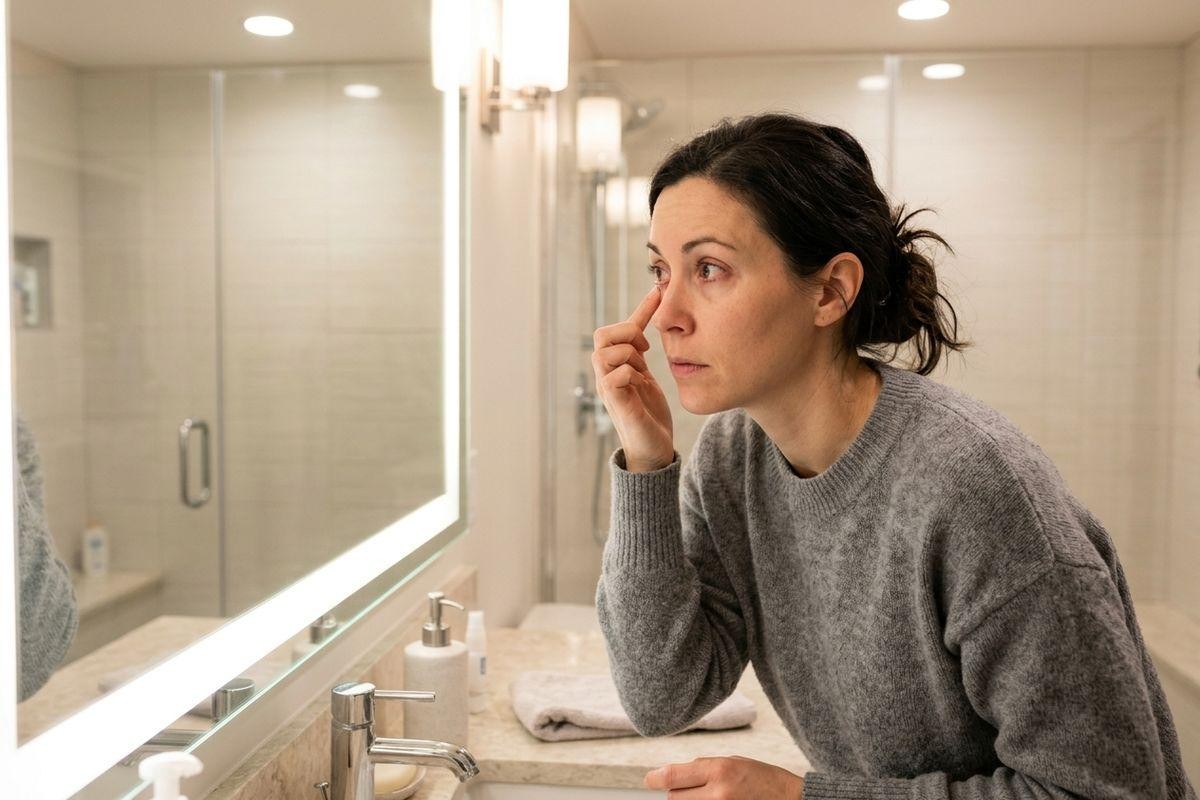
Common signs of thyroid-related eye discomfort include dry eye symptoms like dryness, grittiness, or strangely watery eyes, often all on the same day. You might notice puffiness around your eyelids or swelling that doesn’t seem connected to allergies or poor sleep.
Blurry or double vision are also potential symptoms. If your vision feels off and your thyroid health has been a concern, it’s worth mentioning your symptoms to a healthcare provider.
What the Early Stages Can Feel Like
In their earlier stages, symptoms may feel subtle enough to dismiss. Nonetheless, you may experience more notable signs like pressure behind your eyes, increased sensitivity to light, or eyes that look red and feel sore. Regardless of their cause, all of these symptoms are worth getting checked out.
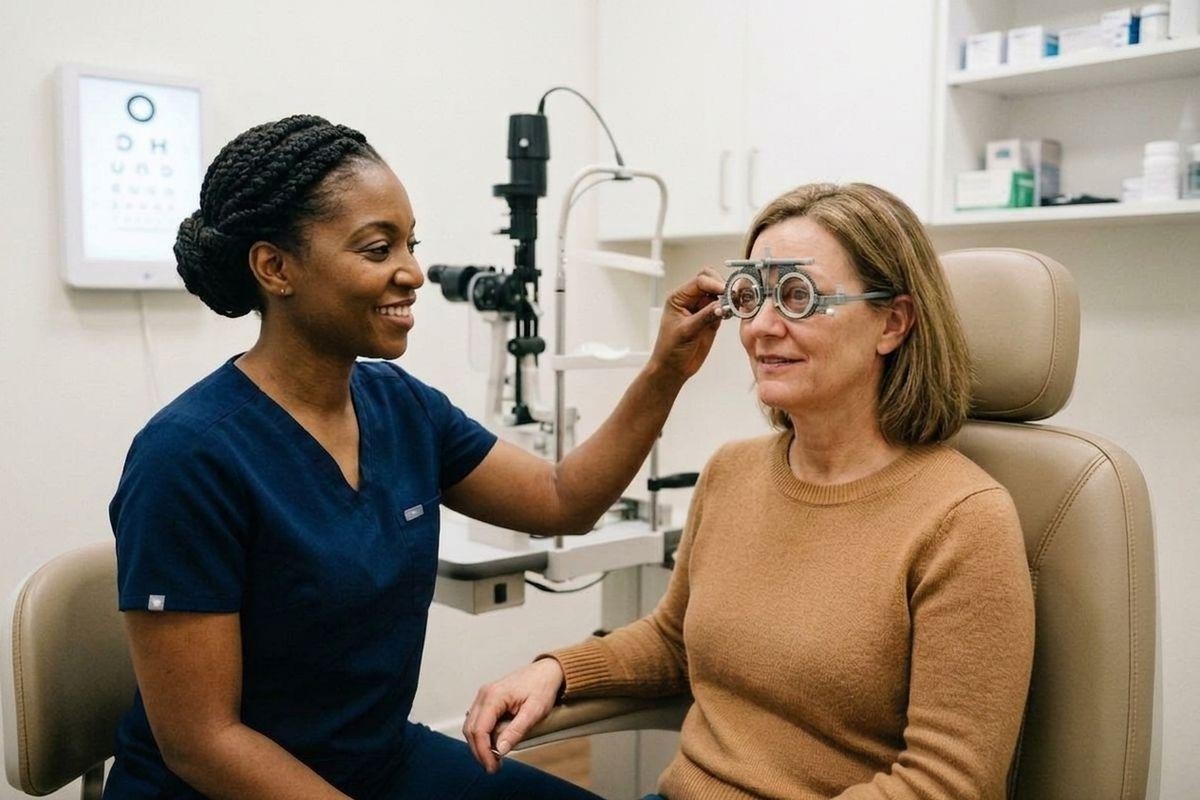
Many of these symptoms can have causes other than thyroid disease, so it’s worth visiting your optometrist, who can take a closer look at your eye health. A comprehensive eye exam gives your eye care provider the tools they need to spot changes early.
What Is Thyroid Eye Disease?
How It Develops
Thyroid eye disease is an autoimmune condition most often linked to Graves’ disease, though it can also appear with other autoimmune thyroid conditions. For people with this condition, the immune system produces antibodies that mistakenly affect the muscles and tissues behind your eyes, causing them to swell and shift forward.
One thing that surprises many people is that thyroid eye disease can develop even when thyroid hormone levels are within a normal range. This is why eye symptoms in someone with a thyroid history shouldn’t be brushed off just because their thyroid numbers look fine.
Who Is at Higher Risk
People living with Graves’ disease have the highest risk of thyroid eye disease, though it can also occur, less commonly, in people with Hashimoto’s thyroiditis or other autoimmune thyroid conditions. Women are more frequently affected, though the condition can develop in anyone with an autoimmune thyroid condition.
Smoking is a notable factor that significantly raises risk. If you smoke and have a thyroid condition, keeping a close eye on changes related to your vision or eye comfort can be worthwhile.
Dry Eye & Other Long-Term Effects
Dry eye is one of the most common eye-related issues that comes with thyroid disease. When the tissues around your eyes are affected, the surface of your eyes can become exposed and may have trouble staying properly lubricated. This can lead to the burning, scratchy, or watery feeling that many people find difficult to manage. Learning more about how dry eyes can affect your daily comfort can help you understand the full range of what you might be experiencing.
What makes thyroid-related dry eye particularly frustrating is that the symptoms can stick around even after your thyroid levels have been brought under control. Even when your thyroid levels stabilize, the tissues in your eyes don’t always recover at the same pace.
Dry eye treatment can help relieve ongoing discomfort, giving your eyes a chance to feel more comfortable in your daily life.
Eye Care & Disease Management at Erie Shores Eyecare
What an Eye Exam Can Reveal
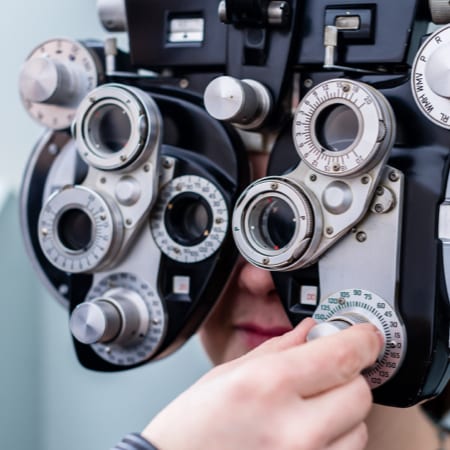
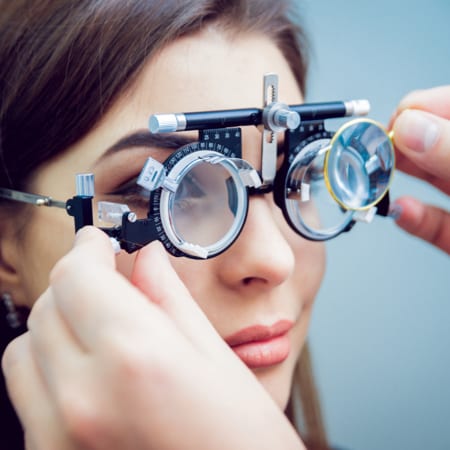
A thorough eye exam does more than just check your prescription. It also gives your care provider a chance to identify changes in your eye health. Tools like optical coherence tomography (OCT) allow for a detailed look at the structures inside and around your eyes, supporting earlier detection of potential problems.
Whether you’re visiting our Leamington or Essex location, regular monitoring can make a meaningful difference.
Support for Ongoing Eye Health
Erie Shores Eyecare offers eye disease management and dry eye treatment for patients navigating thyroid-related eye concerns. The team takes a patient-focused approach, taking the time to understand what you’re experiencing and working with you on a care plan that fits your needs.
If you have a thyroid condition and have been noticing changes in how your eyes feel or look, contact our team at Erie Shores Eyecare. Book an appointment at our Leamington or Essex location to get a clearer picture of your eye health and what options are available to you.