
Key Takeaways
- Toric contact lenses are designed specifically for people with astigmatism.
- They have two different curves instead of one, which corrects how light enters your eye.
- They must stay properly oriented on your eye to work correctly.
- Fitting may take more time and visits than standard contact lenses.
If you’ve been told you have astigmatism, you probably already know that glasses help clear things up. But maybe you’d rather skip the frames. That’s where toric contact lenses come in.
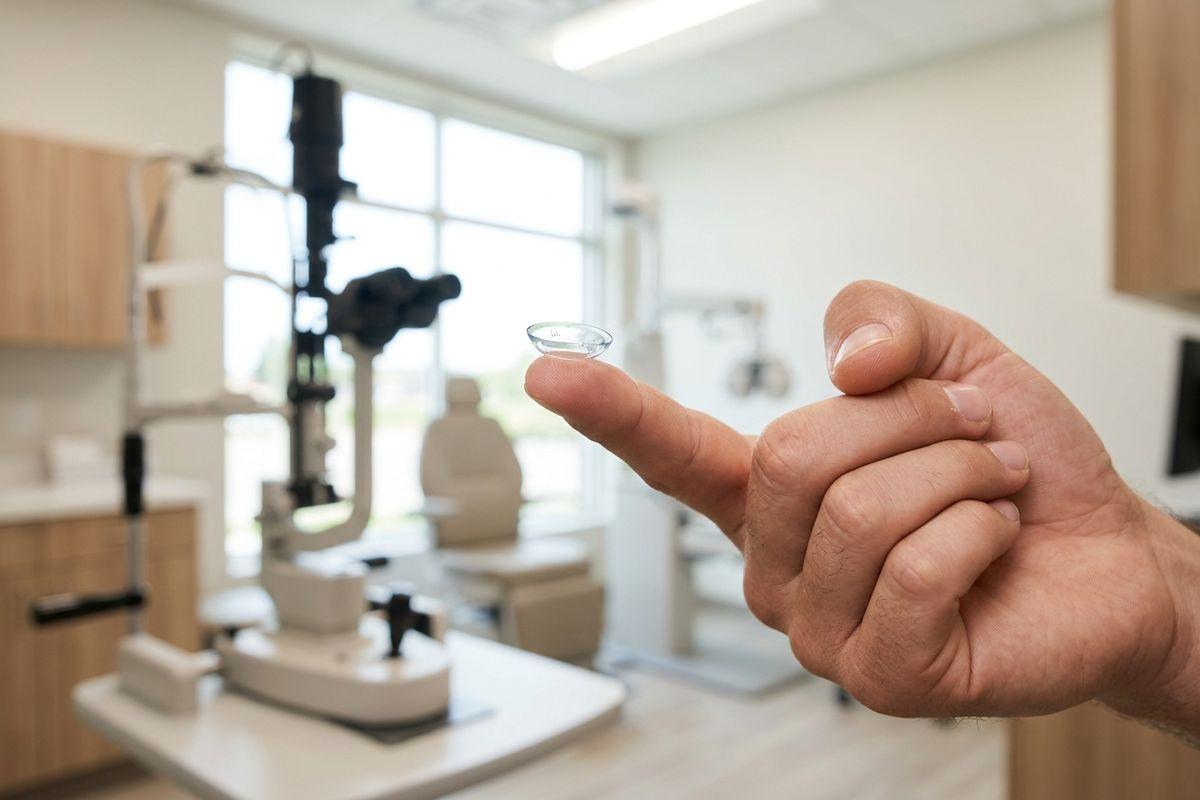
Toric contact lenses are designed to correct astigmatism, which occurs when the cornea or the lens inside the eye focuses light differently across its meridians. Instead of forming one clear focal point, the eye may create blur or distortion at near and far distances. Toric lenses contain cylinder power and an axis so they can correct that directional difference, which is what sets them apart from standard spherical contacts.
How Toric Lenses Differ from Regular Contacts
Shape and Prescription
A standard spherical contact lens uses the same optical power in every meridian. A toric prescription adds cylinder power and an axis to the sphere measurement. Cylinder describes how much astigmatism correction is needed, while the axis identifies the orientation of that correction.
Orientation and Fit
This is where toric lenses get a bit more specific. Because they correct two different focal points, they need to sit in the right position on your eye at all times. If the lens rotates, your vision blurs.
To keep the prescription aligned, toric lenses use stabilization features such as prism ballast or thin and thick zones. Blinking and eyelid pressure help the lens settle into a repeatable position. Because small amounts of rotation can affect clarity, fitting often requires more care than a standard spherical lens.
Types of Toric Contact Lenses
Toric lenses are available in daily disposable and planned-replacement schedules, although the choices depend on your prescription and the brand. Daily lenses can simplify care, while reusable lenses may suit people who are comfortable with cleaning and storage.
Soft toric lenses are a common choice because they are flexible and available in many prescriptions. Rigid gas-permeable and specialty lenses can also provide excellent vision for some forms of astigmatism, but they work differently and may require more adaptation. Toric prescriptions can correct astigmatism together with nearsightedness or farsightedness.

How Toric Lenses Feel at First
What to Expect During the Adjustment Period
It can take a few days to get used to the awareness of a new lens and to learn what stable toric vision feels like. The lens may shift slightly with a blink and then settle back into position. Mild, brief fluctuations can happen at first, but vision should become consistently clear once the fit and prescription are right.
Why Vision May Blur or Fluctuate
Persistent blur is not something you need to simply accept. A lens can rotate, dry out, move too much, or fit too tightly. The cylinder power or axis may also need refinement. If clarity changes through the day, note when it happens and bring that information to your follow-up visit so the fit can be adjusted.
Toric Options for Different Needs
Today’s options include soft daily disposables, reusable soft lenses, custom soft lenses, and rigid or specialty designs. Some people who need near-vision correction may also be candidates for multifocal toric lenses. Availability depends on your prescription, eye health, comfort, and daily visual demands.
Getting Fitted for Toric Lenses at Erie Shores Eyecare
What the Fitting Process Looks Like
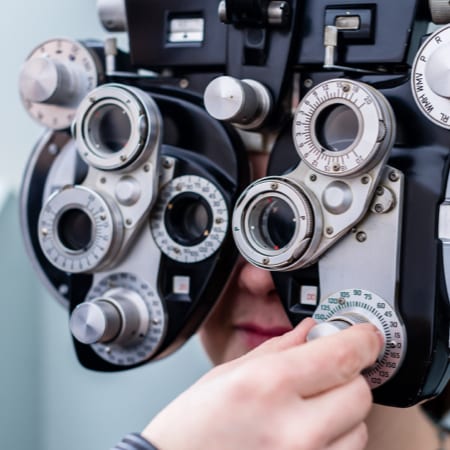
At Erie Shores Eyecare, the fitting process starts with a thorough contact lens exam and a fitting. Your eye doctor reviews your prescription, corneal curvature, tear film, and overall eye health before selecting a trial lens. From there, you’ll try the lens on, and the eye doctor will evaluate how it sits and whether it stays in position when you blink. Adjustments happen from there until the fit feels right and your vision is clear.
Who Can Benefit
Many people with corneal or lenticular astigmatism can wear toric lenses. They can also correct nearsightedness or farsightedness at the same time, although available powers and designs vary. A fitting confirms whether a soft toric, rigid, or specialty lens is the best match.
Find Your Right Fit
If you’ve been wearing glasses to manage astigmatism and you’re curious about contacts, or if you’ve tried regular contacts before and found the vision wasn’t quite right, toric lenses may be worth exploring. Our team at Erie Shores Eyecare, serving Leamington and Essex, Ontario, is ready to walk you through your options and help you find a comfortable, clear-vision solution that fits your everyday life. Reach out to book your contact lens fitting today.