

Floaters are the specks, threads, and faint rings that drift across your vision. They stand out most against a plain background, so a blue sky, fresh snow, or a blank screen tends to bring them out.
Floaters appear when small clumps of collagen inside the vitreous, the clear jelly that fills your eye, cast shadows on your retina. Age explains most of them. Inflammation, bleeding, or a retinal tear can also be behind them, which is why a sudden new batch may deserve a proper look at the back of your eye.
What Eye Floaters Look Like
Descriptions vary a lot from one person to the next. Some people see small dark dots. Others notice threads, cobwebs, or a faint ring hovering just out of reach. Movement is the giveaway. Floaters drift along with your eye, which is why chasing one never works.
Watch for a few of these shapes:
- Small dark specks or dots
- Squiggly lines and thin threads
- Cobweb or cloud shapes
- Faint rings or circles
- Shadows that show up against bright, plain backgrounds
Most people notice floaters in one eye at a time, though having them in both is common enough. They can also seem much larger than they are, since a clump sitting close to the retina throws a wide shadow.
What Causes Eye Floaters
The vitreous fills the back of your eye and helps it hold its shape. Over the years, it liquefies and pulls away from the retina, a normal change called posterior vitreous detachment.
As the jelly contracts, strands of collagen inside it clump together. Those clumps sit between incoming light and your retina, and the shadows they throw are what you see drifting past. Nothing has landed on the surface of your eye, though it can certainly feel that way.
Nearsighted eyes tend to be a little longer from front to back, which puts more tension on the vitreous. That can bring the whole process on years earlier.
Other Possible Contributors
Age isn’t the only reason floaters turn up. A few other situations can put them in your line of sight:
- Inflammation inside the eye
- Bleeding into the vitreous
- A retinal tear or detachment
Who Is More Likely to Notice Floaters
Floaters can show up for anyone, though some people notice them sooner or more often. If you’re 50 or older, or you’ve worn glasses for nearsightedness since childhood, floaters may become a regular part of your day. A past eye injury or cataract surgery can make them more obvious too.
Diabetic retinopathy and long-term inflammation can also raise the odds. Staying on schedule with diabetic eye exams can help if either one applies to you.
When Floaters Need Prompt Attention
A few specks drifting past on a sunny afternoon is common. A sudden change in what you see is different, and it calls for same-day attention.
Call right away if you notice any of these:
- A sudden burst of many new floaters
- Flashes of light in the same eye
- A grey curtain or shadow crossing your vision
- Side vision that’s gone missing
Any of these can signal a retinal tear. Caught early, a tear can often be repaired before it progresses to a detachment.

How an Eye Doctor Checks Your Eyes
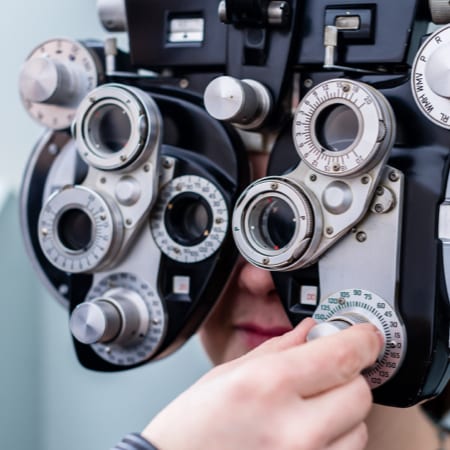
An optometrist can use drops to dilate your pupils, opening a wider view of the retina at the back of your eye. From there, we look at whether the retina is intact and whether inflammation or bleeding is part of the picture. Imaging can record what your retina looks like today, giving us something to compare against later.
Expect a few hours of light sensitivity and blurriness up close once you leave, so bring sunglasses and, ideally, someone who can drive.
Tell us when the floaters started and whether anything has changed since. Small details like that shape what we go looking for.
Floaters and Your Options Ahead
Many floaters settle lower in the eye and drift out of your central view. Your brain also adapts over time, so floaters you noticed constantly in the spring may go unnoticed by fall.
Many floaters need no treatment at all. Regular exams can track what you’re seeing and monitor your retina, which matters most in the weeks after a new floater appears.
When floaters get in the way of reading or driving, ask your optometrist about a vitrectomy or laser vitreolysis. Both carry risks worth talking through before you commit to anything.
Get Your Floaters Looked At
Floaters that come and go are part of life for plenty of people. A sudden change in what you see is another story, and an exam can help you find out which one you’re dealing with.
Erie Shores Eyecare can take a careful look at your retina and answer your questions in plain language. Book your eye exam today!